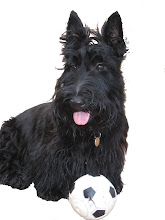
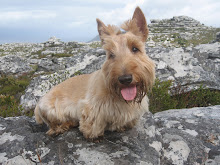
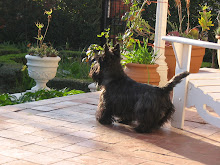
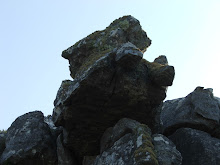
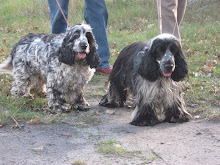
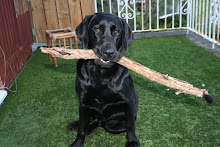
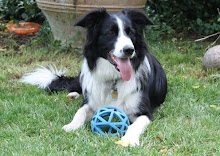
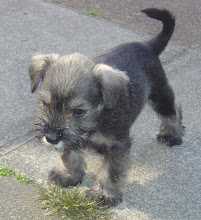
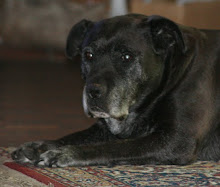
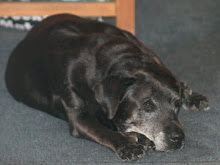
We are off to Daisy and Dougal is all ready and waiting in the land rover.

So am I. Hoity toity on my new blanket.

As we drove through Napier en route to Agulhas, we noticed lots of scarecrows hanging about,

and when we stopped at our usual place for lunch (we were a bit too late for their breakfast!) there was a stary snary pig outside. We asked them why there were all these funny things around and were told ...

it was the Patatfees!

But are these patat chips? No indeed they are not. They are potato chips. Patats are actually sweet potatoes. Its all rather difficult for a scotty brain to grasp, but the chicken pie was delicious even if we only got the tiniest of tiny tidbits.

At Daisy we went for an afternoon stroll to Rasperpunt to investigate the fieldmice which kept us busy for ages,

before early supper and early bed.

The next morning we drove to Agulhas, past the lighthouse which is apparently going to have a re-vamp very soon.

The Alph went into our favourite shop to buy gas for the cooker and nearly fell over our friend the Border Collie. (Border Collies always have their mind on higher things like herding sheep.)

We found these poor bokke all scommled around in a red machine outside the shop, which reminded the humans that there was an important rugby match later on. Luckily they could check the score on their cellphones. (We won!).

We then parked the land rover at the entrance to Agulhas and, guidebook in hand, we set out on the Spookdraai Staproete.

The trail starts in the main road and goes past some ghostly white horses,

with ghost stone markers all along the way for humans to follow and dogs to send wee mail from.

It was Father's Day - but we wondered about the fathers in Agulhas. I have seen some lurching around after a night in the pub, but isn't it a bit early for lurching?

These buildings were apparently built during World War 2 as a secret radar base which was manned and controlled by a British Women's Unit. (The use of "manned" here is quite PC as its base is the Latin word for hand -
manu.) The existing road that leads up the Sandberg to the TV-signal enhancer mast originally led to the radar apparatus. Mount Pleasant is now holiday houses.

In the grass along the road were all sorts of interesting flowers like these lachenalias - probably
Lachenalia bulbifera,
and lots of these strange little Hedgehog Lilies (
Massonia pustulata).

The path suddenly left the streets of Agulhas and took off up the hill into the limestone fynbos.

The Alph looking over Cape Agulhas from an old water tank. You can just see the lighthouse in the far distance.

Some wag painted around this natural foot shape in the limestone. There are lots of little holes in the limestone up here, most of them filled with miniature plants.

Another ghostly marker and a snary limestone cave. We heard a rumour that caracals are often seen in these caves.

The rare Limestone Pagoda (
Mimetes saxatilis) which is endemic to limestone ridges from Pearly Beach to Struisbaai and is listed on the Red List of South African plants as Endangered.

The Limestone Conebush (
Leucadendron meridianum) looking over Agulhas.

Yet another plant endemic to these limestone ridges is the Limestone Blombos (
Metalasia calcicola).

This pretty little flower has the most unfortunate name of Fineleaf Skunkbush (
Chaenostoma revolutum). I know how it feels as I am often called a Skunkdog.

The Food Lady wants me to include just two more limestone endemics before you all fall fast asleep,
Euchaetis meridionalis (a type of buchu) that only occurs on limestone in the eastern part of the southern Overberg,

and the Limestone Sugarbush (
Protea obtusifolia).

These strange puff balls in the middle of the path were all puffed out.

Looking towards Struisbaai. The path then meandered down to the start.

All in all this is a pretty fantastic walk through the limestone fynbos of the southern tip of Africa. We were all ready to lurch into a traditional Agulhas Sunday lurch afterwards.
 Today we (The Alph, FL, Dougal and me) set out in the rain with Paul and Pauline,
 and Alice and Maddie, along the track to check on the Marsh Pagodas. The more sensible of the walkers stayed in bed again.
 The facilities have been upgraded here we were pleased to see.
 A little Babiana - possibly the Winter Babiana (B. villosula) - was braving the rain,
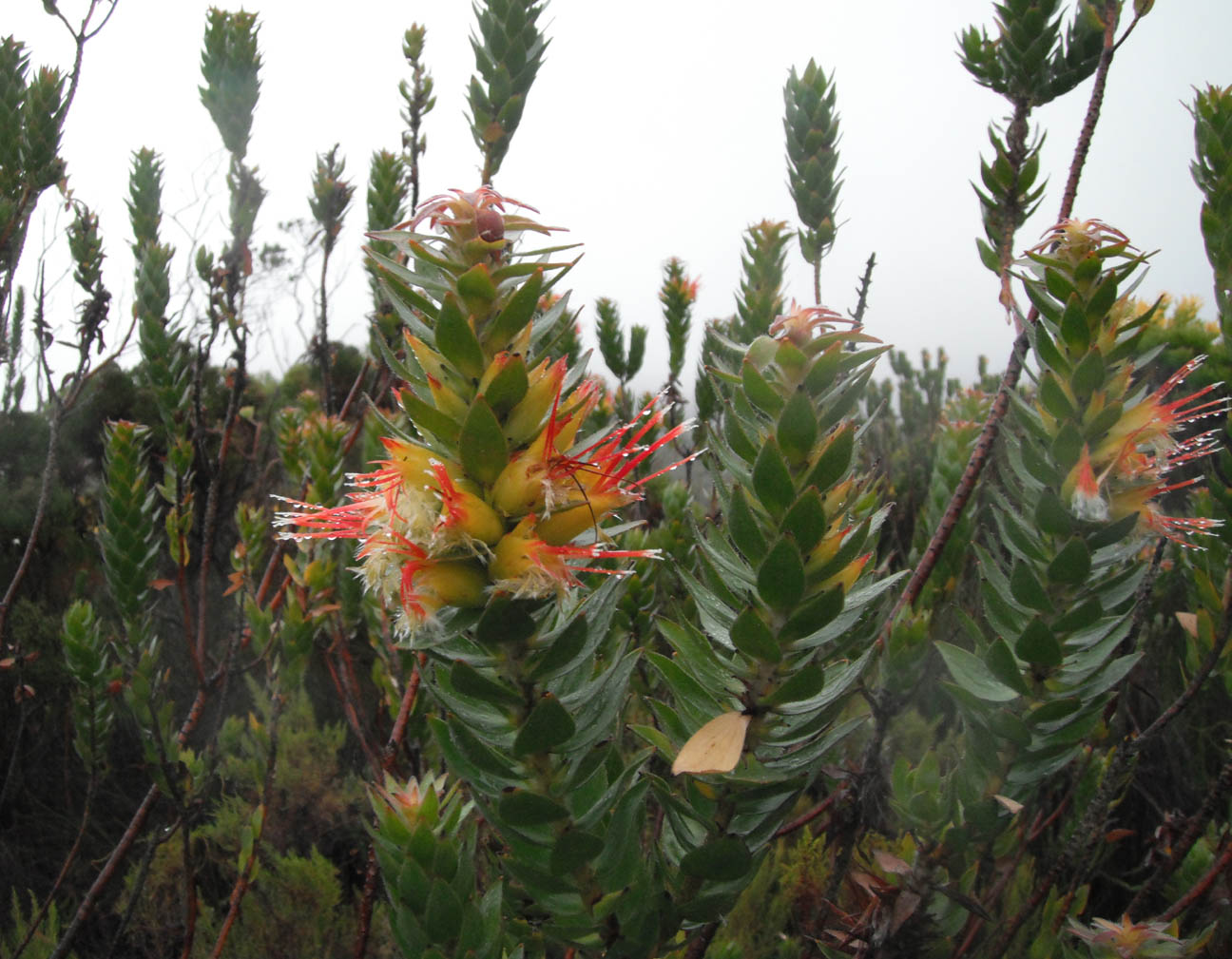 and the rare March Pagodas (Mimetes hirtus) were starting to flower in the boggy area they seem to love.
 Come on, stop looking at the flowers and hurry up. There are lots of rodents to flush out of the bushes.
 The King Protea, always beautiful!
 Dougal trying to persuade me into the soggy fynbos to hunt for mice. No thanks! Not today. Its just too wet.
 The only other person we encountered in the rain was an Englishman (complete with St George Cross beanie) and three bedraggled mad dogs. I tried hard to make friends with them.
 The rushy river reminded the Food Lady of the poem about fairies* that goes
 And here is one of the blighters in a Bicolour Currant-rhus (Searsia tomentosa). Needless to say, I was too wet to think of chasing fairies today and very pleased to get into the car and go home to a nice warm fire.
 An early start up the Steenberg with the sun just coming out over the Cape Flats. Pauline was back today which was exciting. Her foot is much better. Paul and Alice and Maddie also came. What utter bliss life is for a little black scottie!


 Seen on the le Roux's fridge. Well done Claude!
 Today we discovered a wonderful new walk. The Food Lady has been part of the way before with the Friends of Silvermine and we have been to Kleinplaas Dam lots of times, but most of it was new territory. We met Alice and Maddie (everyone else was snug in their beds!) at the ghost town parking spot just before the Brooklands water plant at the end of the Pineview/Brooklands road off Red Hill Drive, and set off along the path to Kleinplaas Dam.
 The veld was burned quite recently and there were lots and lots of interesting plants popping up in the sandy veld including these little Winter Babianas (Babiana villosula),
 and these odd little Snake Lilies (Ornithoglossum viride),
 and the tiny little Winter Spike-lily (Wurmbea hiemalis) - which is endemic to the Cape Peninsula.
 We quickly got to the dam and discovered that the water had reached the measuring stick -
  Maddie found the waves on the dam a bit snary.
 and I became snared in a fairy circle. Round and round ...