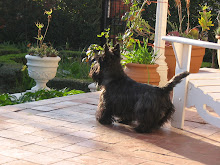
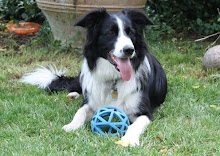
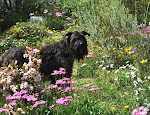
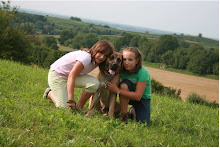
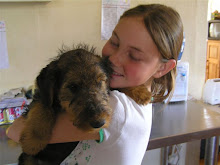
No wind, no rain, no too-hot-sun. Takers for the Foodlady’s walk were Alice, Sue, Pauline, Thea (who is threatening to bring Boris the Boerbul but she is worried that Boris might think we are snacks-before-supper so I am a bit nervous to meet him), Kristin who is visiting from the USA, Alpha Male (feeling surrounded by X-chromasomes) and Dougal. And me of course. We set off up the Great Mole Path that the humans insist on calling the Mule Path. And we saw these plants growing all along the path. At first they seemed like any other fynbos plant, but check the fruit!
  They are DOGFACES! Trichocephalus stipularis. Now these are what I call cool plants!
  We soldiered up Echo Valley and then the Foodlady led us up the WRONG path. Instead of going up the Jojolu Track (not, as far as I know, named after a French Poodle)
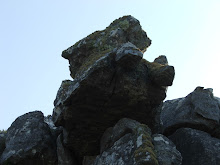
  we went up to the Rock Arch and somehow she forgot that you had to back-track and link up with the Jojolu Track in order to safely get around the side of Cave Peak.
 (The Foodlady says the map she has is sadly lacking but this one she found on the Internet makes it as clear as a brass bell. She is DEEPLY EMBARRASSED!)
 After a bit of exciting walking past scary caves and drippy cliffs, we decided to head down a safer-looking path for tea.
 Sadly Richard was not here to see this Rock Kestrel.
 Tea was a sumptuous affair as always except that she forgot to give us a drink although there were lots of pools of water around – but really! Here we are having tea (well, some of us were) overlooking Clovelly and Trappieskop.
  Tails up on a lovely path that runs from Kalk Bay to Clovelly. Here we are heading back to Kalk Bay.
The path wound through flowering Rhus tomentosa (new name Searsia tomentosa)  and giant tree ericas. Pauline remarked how they were like tree ericas she had seen on Mt Kilimanjaro. In the book, The Ericas of the Cape Peninsula by Ted and Inge Oliver, it says they are Erica tristis “the only species on the Peninsula forming such a large bushy tree; similar tree-like species occurring on tropical African mountains.”
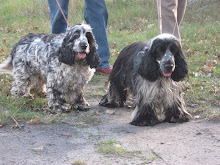
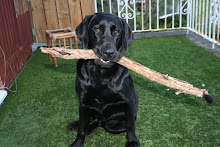
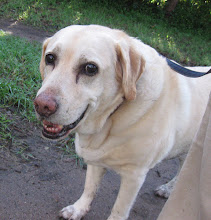
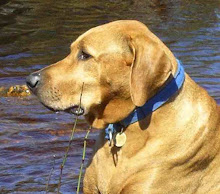
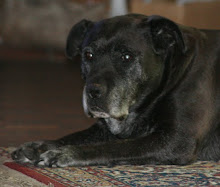
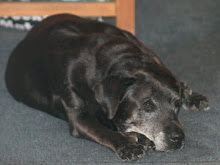
 From the road we headed back up to Weary Willie’s pool, running the gauntlet of lots of dogs on their way down like these doltish labs. I cant even look at them they are so uncool and does that one have a scarf around its neck? What a spiv! But notice how Dougal is sqaring up...
 At the bottom the FL saw this large bark spider hanging over the path in a yellowwood tree.


 Then we just kept going higher and higher and every twist and turn was another "

 Saw lots and lots of other dogs so that
  We left all dogs and humans behind on
  Luckily there was lots to drink.
 Alice and Food Lady found interesting flowers to photograph: lots and lots of Table Mountain Hairy Heath
  And a Cape Snowdrop,
  There were quite a few of these little Granny Bonnet orchids,
  Carpenter bees (which are very common on Table Mountain and important pollinators) also steal pollen from long-tubed